 11
11
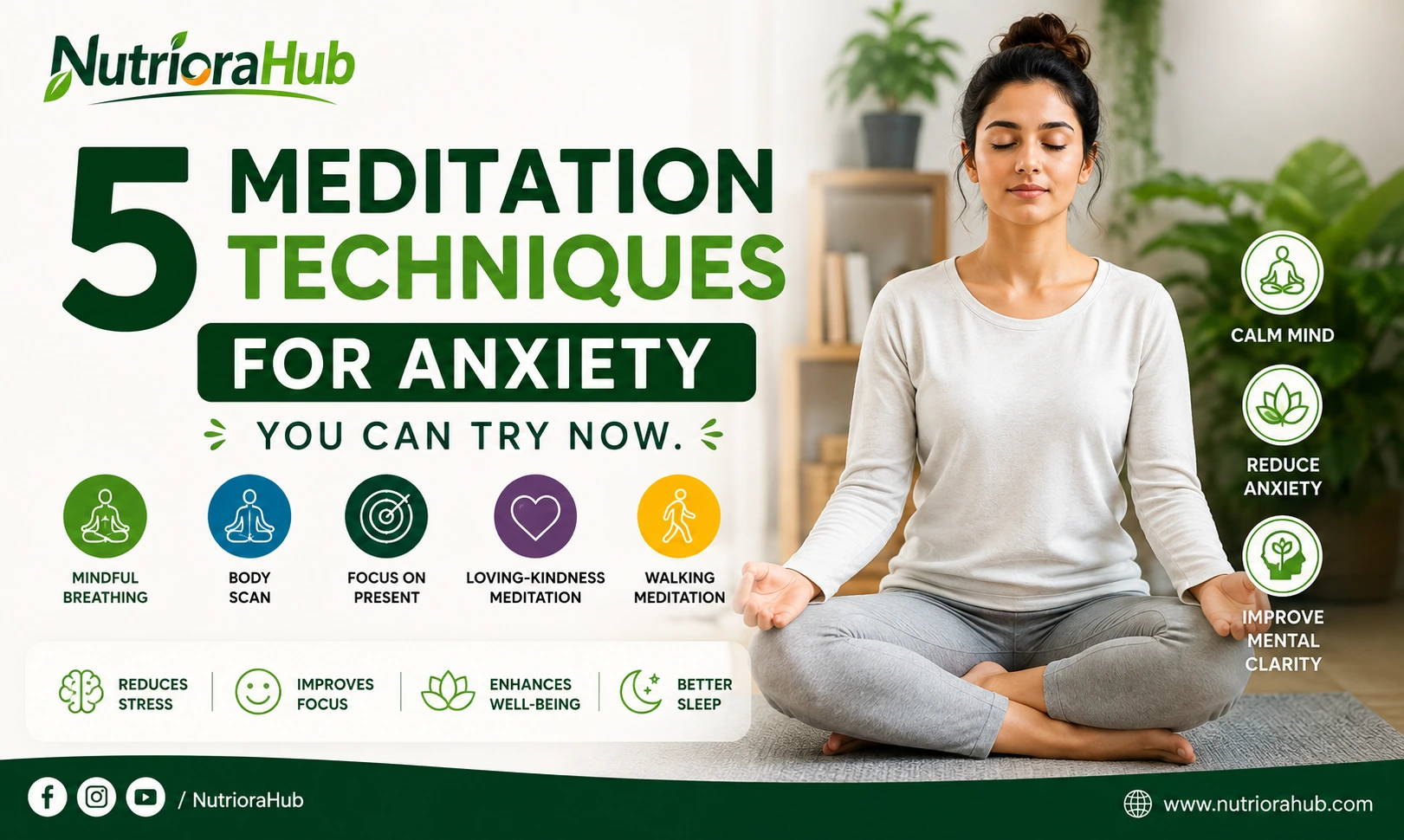
If you find yourself getting worked up when there is silence around, then you are not alone at all. Many people struggle with anxiety every year in the United States, and a quiet mind seems far away from them. The great thing? You don’t have to spend years learning how to meditate or find a remote location to feel better. This article will teach you the five proven Meditation Techniques for Anxiety that you can implement right now!
We will walk through how each method works, why it helps calm the nervous system, and how to fit it into a busy American schedule. We have also included pros and cons, an FAQ section, and a list of trusted resources so you can go deeper if you want to.
Before listing the items, it would be helpful to learn how your body feels during such a period. The thing is that anxiety does not occur “just in your head.” It is a physiological response related to heart rate, breathing, and stress hormone changes. Knowledge about anxiety symptoms and treatment will help you feel more confident.
| Anxiety Symptom | How It Shows Up | How Meditation Helps |
|---|---|---|
| Racing heart | Feels like your chest is pounding | Slows heart rate through controlled breathing |
| Shallow breathing | Quick, chest-only breaths | Encourages deep, diaphragmatic breathing |
| Racing thoughts | Mind jumps from worry to worry | Trains focus and present-moment awareness |
| Muscle tension | Tight shoulders, clenched jaw | Releases tension through body awareness |
| Restlessness | Trouble sitting still or sleeping | Builds a sense of calm and grounding |
This is exactly why Meditation Techniques for Anxiety are recommended so often by therapists, doctors, and wellness coaches. They work directly with the body’s stress response instead of just distracting you from it.
Here is the full breakdown of all five techniques, laid out so you can compare them at a glance.
| S. No. | Technique | What It Is | Time Needed | Best For |
|---|---|---|---|---|
| 1 | Deep Breathing Meditation | Slow, intentional breathing patterns | 3–5 minutes | Sudden panic or racing thoughts |
| 2 | Body Scan Meditation | Mentally scanning the body for tension | 10–15 minutes | Physical tension and trouble sleeping |
| 3 | Mindfulness Meditation | Observing thoughts without judgment | 5–20 minutes | Chronic overthinking and worry |
| 4 | Guided Meditation | Following a recorded voice or app | 5–30 minutes | Beginners who want structure |
| 5 | Grounding Meditation | Using the five senses to anchor to the present | 3–10 minutes | Panic attacks and dissociation |
Let’s look at each of these Meditation Techniques for Anxiety in more detail.
One of the simplest techniques of meditation for anxiety is also the most effective technique. Deep breathing exercises activate your parasympathetic nervous system, which is your body’s “rest and digest” response.
The breathing technique is sometimes known as “box breathing” and is practiced by anyone, from therapists to Navy SEALS, to deal with stress at times of pressure. Doing such breathing exercises on a regular basis will reduce the level of cortisol and make your body feel safe.
The body scan meditation is one of the most calming Meditation Techniques for Anxiety because it reconnects your mind with your physical body — something anxiety tends to disrupt.
This technique proves particularly beneficial before sleep, as it can help relieve muscle tension and allow many to get rid of insomnia..
Perhaps the most studied Meditation Technique for Anxiety is Mindfulness meditation, and there is no wonder why this is the case. Unlike other approaches, this one teaches the individual how to observe their own thoughts and emotions, rather than suppressing them.
With this type of meditation, the individual can train their mind to react to stressful situations curiously, rather than with anxiety.
Should sitting in silence seem a daunting task, guided meditation for novices is simply an amazing way to begin Meditation Techniques for Anxiety practice. There is absolutely nothing left to guessing because someone else talks you through the whole process.
It is one of the most friendly Meditation Techniques for Anxiety practices for beginners because of the lack of pressure about “doing it right”.
The Grounding Exercises for Anxiety are intended for those times when panic overtakes you, and it is crucial to get yourself grounded immediately. This Meditation Technique for Anxiety is one of the most useful ones since it can be performed anywhere — at your workplace, in your car, or amidst crowds of people.
This technique is also known as the “5-4-3-2-1” technique.
Just like any other form of wellness, the following strategies do have their strengths and weaknesses that one should be aware of prior to starting.
| Pros | Cons |
|---|---|
| Free and requires no equipment | Takes consistency to see lasting results |
| Can be practiced almost anywhere | May feel awkward or difficult at first |
| Backed by scientific research | Not a replacement for professional treatment in severe cases |
| Improves sleep and focus over time | Some techniques require quiet, private space |
| No side effects like medication | Results vary from person to person |
| Builds long-term emotional resilience | Progress can feel slow in the beginning |
Knowledge of both aspects will help you create realistic expectations about your future experience. While Meditation Techniques for Anxiety may not serve as a panacea, they really are an effective technique as long as you practice it regularly, along with other healthy activities.
Meditation becomes more effective when combined with additional stress reduction techniques such as physical exercises, keeping a journal, enjoying nature, and cutting down on caffeine. Various relaxation techniques, including progressive muscle relaxation and taking a bath before bed, may also assist in achieving the desired effect.
It may be hard to believe, but the food we consume actually influences our feelings of anxiety. Fluctuations in blood sugar levels can make us act or behave like people with anxiety or intensify our anxiety symptoms, which makes proper nutrition an integral part of the overall process. In case you are interested in Meditation Techniques for Anxiety, you should definitely combine them with proper nutrition, such as that provided by NutrioraHub.
A few related topics worth exploring on their site include general Good Nutrition basics, practical Weight Loss Tips, the fundamentals of Nutrition itself, and a list of High Protein Foods that support stable energy throughout the day. For readers managing metabolic health, understanding What Is Diabetes, recognizing the dangers of a Blood Sugar 400 reading, or learning what it means to be Pregnant With Low Blood Sugar can all tie directly into how your body handles stress and anxiety.
What Meditation Techniques for Anxiety will help you to achieve is training your nervous system to have a new norm. Rather than always being on alert, the calming of your nervous system through regular meditation practice makes your body aware that it is safe despite stress. This is why you are advised to go for daily short meditation sessions rather than long sessions once in a while.
If you want to dive deeper into research-backed information, these five trusted resources are a great place to start.
| Resource | What You’ll Find There |
|---|---|
| National Institute of Mental Health (NIMH) | Government research on anxiety disorders and treatment |
| Mayo Clinic | Medical guidance on anxiety symptoms and meditation |
| American Psychological Association (APA) | Expert articles on mental health and coping strategies |
| National Center for Complementary and Integrative Health (NCCIH) | Research on mindfulness and meditation practices |
| Headspace | Beginner-friendly guided meditation sessions |
Some people feel calmer after a single session, but noticeable long-term changes usually take 4–8 weeks of consistent practice.
Yes. Guided meditation for beginners is designed specifically for people who have never meditated before.
No. Meditation works best as a supportive tool alongside professional treatment, not a full replacement.
Many people prefer mornings to set a calm tone, though evening sessions can help with sleep-related anxiety.
Not at all. While apps are helpful for guided meditation for beginners, techniques like deep breathing and grounding require no tools.
Yes. Blood sugar crashes and poor nutrition can worsen anxiety symptoms, which is why pairing meditation with good nutrition habits matters.
Though it is overwhelming, you have more control over your reaction to the state of being anxious than you may realize. There are five Meditation Techniques for Anxiety that will lead you to a calmer mindset through various pathways.
Start out slow by selecting just one of the five techniques mentioned above and practice it for five minutes today. These moments will gradually help you to make progress toward managing your stress. If you suffer from mild or persistent anxiety, Meditation Techniques for Anxiety are free, effective, and a great starting point for managing your condition.




One thought on “5 Meditation Techniques for Anxiety You Can Try Now”