 11
11
For decades, the world of nutrition has been surrounded by colorful stories, quick-fix promises, and dinner-table debates that never seem to end. Indeed, almost everyone has heard a claim about food that sounded convincing at first but turned out to be nothing more than food fiction dressed up as science. Fortunately, as research has advanced, it has become much easier to tell nutrition myths apart from genuine, evidence-based nutrition. In this article, we will joyfully walk through some of the most popular diet misconceptions, replace them with healthy eating facts, and show you exactly how good, reliable information can make everyday eating simpler, more enjoyable, and far less stressful.
Before exploring common nutrition myths, it is important to understand why they spread so easily. In many cases, a single research study, a viral social media post, or a celebrity’s opinion gains massive attention before the facts are properly verified. Consequently, unproven claims often become accepted as truth, while evidence-based nutrition advice receives far less attention. The same confusion can also affect people searching for reliable Weight Loss Tips, causing them to follow ineffective or unhealthy practices. Therefore, understanding nutrition facts vs myths is essential for making informed health decisions. Moreover, once you recognize how misinformation spreads, you’ll be better equipped to identify misleading claims and confidently choose advice backed by real scientific evidence.
Furthermore, social media plays an enormous role in this cycle. Because content that sounds dramatic or forbidden tends to get more attention, extreme claims about food often travel faster than balanced ones. Consequently, a simple, well-supported idea, such as “balanced meals support long-term energy,” rarely goes viral, while a bold claim like “this one food is secretly harming you” spreads instantly. Even so, the good news is that curiosity, patience, and a willingness to check credible sources can turn anyone into a confident myth-spotter over time.
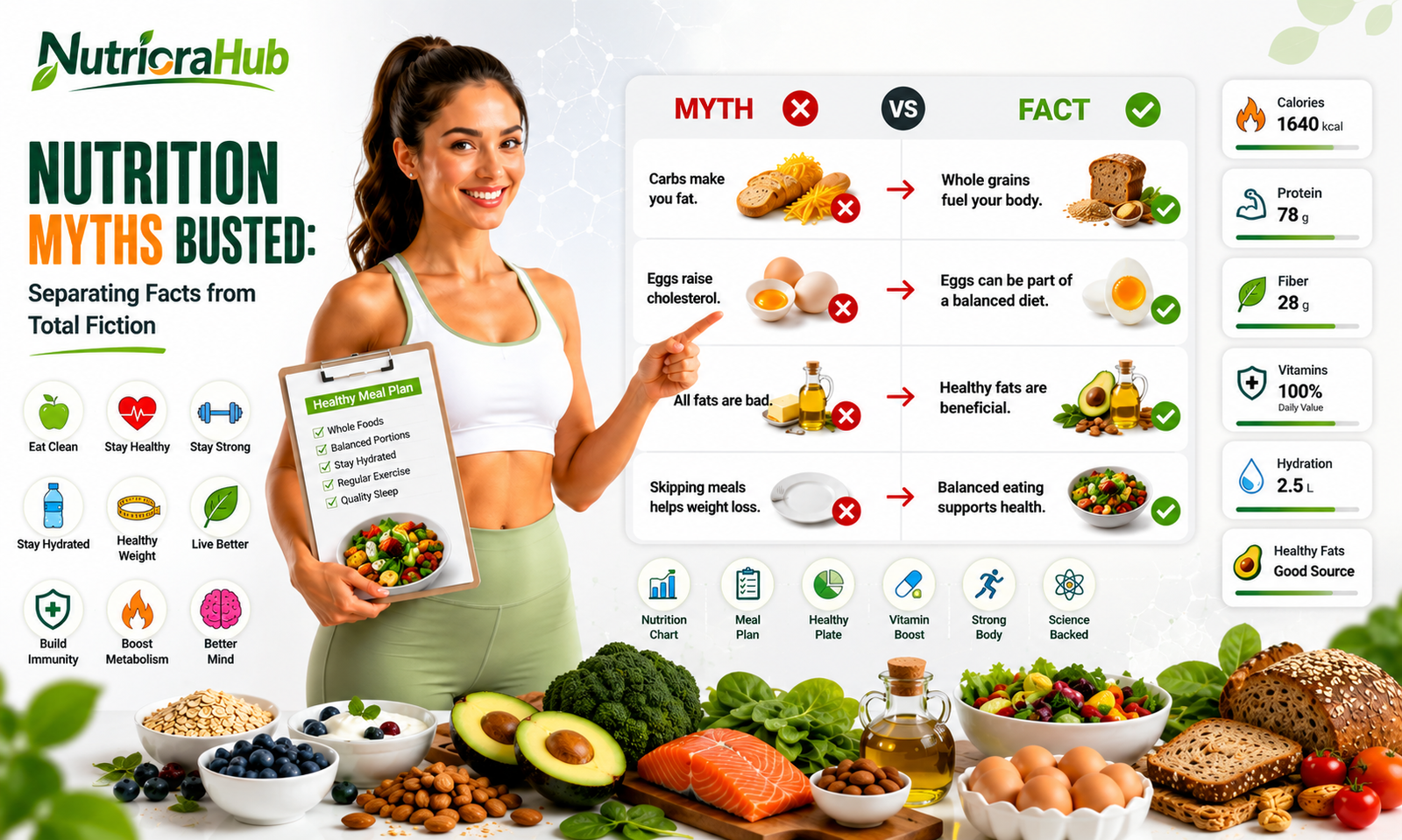
One of the oldest and most persistent common diet myths is the idea that dietary fat should be avoided altogether. However, science paints a much more encouraging picture. In fact, healthy fats found in foods like avocados, nuts, seeds, and olive oil play an essential role in supporting brain function, hormone balance, and the absorption of important vitamins. Therefore, instead of eliminating fat, most guidance today focuses on choosing the right types in sensible amounts.
Moreover, this shift in understanding is a wonderful example of nutrition truth catching up with earlier assumptions. Because early studies grouped all fats together, it was easy to assume they carried equal risk. Since then, however, researchers have shown that unsaturated fats can genuinely support heart health when enjoyed as part of a varied plate. As a result, food no longer needs to feel like a minefield of forbidden ingredients; instead, it can be approached with curiosity and confidence.
Similarly, carbohydrates have long been misunderstood. Many people assume that bread, rice, fruit, and pasta are automatically fattening, yet this is another example of a myth that does not hold up under closer examination. Indeed, carbohydrates are the body’s preferred and most efficient source of energy, and whole-food sources like oats, quinoa, and fruit come packed with fiber, vitamins, and minerals.
In addition, portion size and overall eating patterns matter far more than simply avoiding an entire food group. Consequently, enjoying carbohydrates as part of a balanced plate, alongside protein and colorful vegetables, tends to support steady energy throughout the day. Ultimately, this is one of the clearest examples of how healthy eating facts can replace fear with genuine understanding, allowing people to enjoy a wider variety of delicious foods without unnecessary worry.
Another widely shared idea is that a daily multivitamin or protein powder can stand in for real meals. While supplements can certainly be a helpful addition for specific needs, whole foods (nutrition) offer something supplements simply cannot fully replicate: a rich, natural combination of fiber, antioxidants, and countless micronutrients working together.
Notably, this is where evidence-based nutrition truly shines, because it encourages people to view supplements as a supportive addition rather than a substitute. Likewise, whole foods provide natural satisfaction and variety that pills and powders cannot offer on their own. Therefore, the most encouraging approach is to build meals around colorful, whole ingredients first, and then use supplements thoughtfully if a specific gap genuinely needs filling.
Skipping meals is often promoted as a shortcut to faster results, yet this is one of the more common diet myths that tends to backfire. Instead, regular, balanced meals help maintain steady energy and make it far easier to enjoy satisfying, mindful eating throughout the day. Meanwhile, consistent meal timing supports a positive relationship with food, which is something every long-term wellness journey benefits from.
Undoubtedly, this myth persists because short-term results can feel convincing at first. However, sustainable habits are built on consistency rather than restriction. As a result, many people find that eating regular, well-rounded meals actually makes healthy choices feel more natural and enjoyable, rather than something to dread.
Detox teas, juice cleanses, and other quick-fix products are frequently marketed as a way to flush out toxins. Fortunately, the body already comes equipped with a remarkably efficient natural detox system, led by the liver and kidneys, which works continuously without needing extreme products. Therefore, rather than chasing a trendy cleanse, supporting the body with water, fiber, and a colorful variety of foods is a far more encouraging and sustainable strategy.
In fact, this is a favorite topic among readers who want to separate nutrition facts vs myths once and for all. Since the body’s natural systems are already so capable, the most empowering takeaway is simply to nourish them well through everyday, joyful eating habits.
Many people glance at a nutrition label, feel overwhelmed by the numbers, and simply give up. Understandably, this is one of the more common diet myths worth clearing up, because a nutrition label is actually one of the friendliest tools available for making confident choices. Once you know what to look for, such as serving size, fiber, added sugar, and protein, the rest becomes remarkably easy to interpret.
Additionally, learning to read a label well means you no longer need to rely on marketing claims printed on the front of a package. Instead, you can look past flashy buzzwords and check the facts for yourself in just a few seconds. Consequently, this small habit builds long-term confidence and turns grocery shopping into a much more empowering experience. Similarly, teaching children or family members how to read labels together can turn a simple errand into a fun, shared learning moment. Over time, this practice naturally strengthens everyone’s grasp of genuine truth, one shopping trip at a time.
To make things even clearer, here is a simple table highlighting some of the most common diet myths alongside the encouraging facts that replace them.
| Popular Myth | What the Evidence Shows | Encouraging Takeaway |
|---|---|---|
| All fat is unhealthy | Unsaturated fats support the heart and brain | Choose healthy fats with confidence |
| Carbs cause weight gain | Whole-food carbs provide steady energy and fiber | Enjoy balanced portions freely |
| Supplements replace meals | Whole foods offer nutrients supplements can’t fully match | Build meals around whole ingredients |
| Skipping meals speeds results | Regular meals support steady energy and balance | Eat consistently for lasting habits |
| Detox teas cleanse the body | The liver and kidneys already detoxify naturally | Support the body with water and fiber |
| Eating at night causes weight gain | Total daily intake matters more than timing | Relax about evening snacks in moderation |
| Organic food is always more nutritious | Nutrient content depends on many factors, not just label | Choose what fits your lifestyle and budget |
Because real experiences add so much value, here is a friendly summary of reader feedback after applying these evidence-based nutrition principles in daily life, showing how quickly good nutrition habits can take hold.
| Reader | Myth They Once Believed | Result After Learning the Facts |
|---|---|---|
| A busy parent | “Skipping breakfast helps you lose weight” | Reports feeling more energized after regular meals |
| A college student | “All carbs are bad” | Enjoys balanced plates without guilt |
| A fitness enthusiast | “Supplements can replace real food” | Feels more satisfied building meals around whole foods |
| A home cook | “Detox teas are necessary” | Appreciates simpler, water-and-fiber-based habits |
Altogether, these reflections show how quickly confidence and enjoyment can grow once diet misconceptions are replaced with clear, encouraging guidance.
So, how can anyone put all of this into practice? First and foremost, curiosity is a wonderful starting point. Whenever a bold claim about food appears online, pausing to ask “what does the research actually say?” is a simple but powerful habit. Subsequently, seeking out balanced, well-reviewed information helps separate genuine healthy eating facts from passing trends.
In addition, variety remains one of the most joyful and effective strategies available. Because no single food (nutrition) holds magical powers, focusing on a colorful mix of vegetables, fruits, whole grains, lean proteins, and healthy fats naturally covers a wide range of nutritional needs. Likewise, listening to hunger and fullness cues, rather than following rigid rules, tends to support a happier, more relaxed relationship with food over time.
Moreover, consistency beats perfection every single time. Therefore, small, steady changes, such as adding one more vegetable to a plate or choosing water more often, tend to create lasting results far more reliably than dramatic, short-lived overhauls. As a result, the journey toward better habits becomes something to enjoy rather than something to endure.
Finally, surrounding yourself with credible, positive resources makes an enormous difference. Whether that means following registered dietitians, reading peer-reviewed summaries, or simply asking more questions before believing a headline, every small step builds a stronger foundation of nutrition truth. Ultimately, this foundation makes it far easier to feel confident, calm, and genuinely excited about food choices every day.
In summary, nutrition myths thrive on speed, drama, and simplicity, while real, evidence-based nutrition often takes a little more patience to uncover. However, the reward is absolutely worth it: a calmer, more confident, and more joyful relationship with food. Furthermore, by learning to spot common diet myths and replacing them with healthy eating facts, anyone can feel empowered to make choices that genuinely fit their lifestyle.
Above all, remember that good, sound nutrition is not about chasing perfection or memorizing endless rules. Instead, it is about steadily gathering reliable knowledge, staying curious, and celebrating small wins along the way. As a result, every question you ask and every label you read brings you one step closer to a more confident, well-informed approach to everyday eating.
Consequently, the next time a dramatic claim about food crosses your feed, you will already have the tools to pause, question it, and look for the encouraging truth underneath. Likewise, sharing these insights with friends and family helps the whole community move away from food fiction and toward a more positive, informed way of eating. In turn, every conversation about nutrition that replaces guesswork with genuine understanding makes the next person’s journey a little easier, too.
For those who want to keep exploring dependable, uplifting guidance on everyday eating, delicious recipes, and simple wellness tips, NutrioraHub is a wonderful place to continue the journey. Come explore, ask questions, and keep building habits that make every meal something to look forward to.