
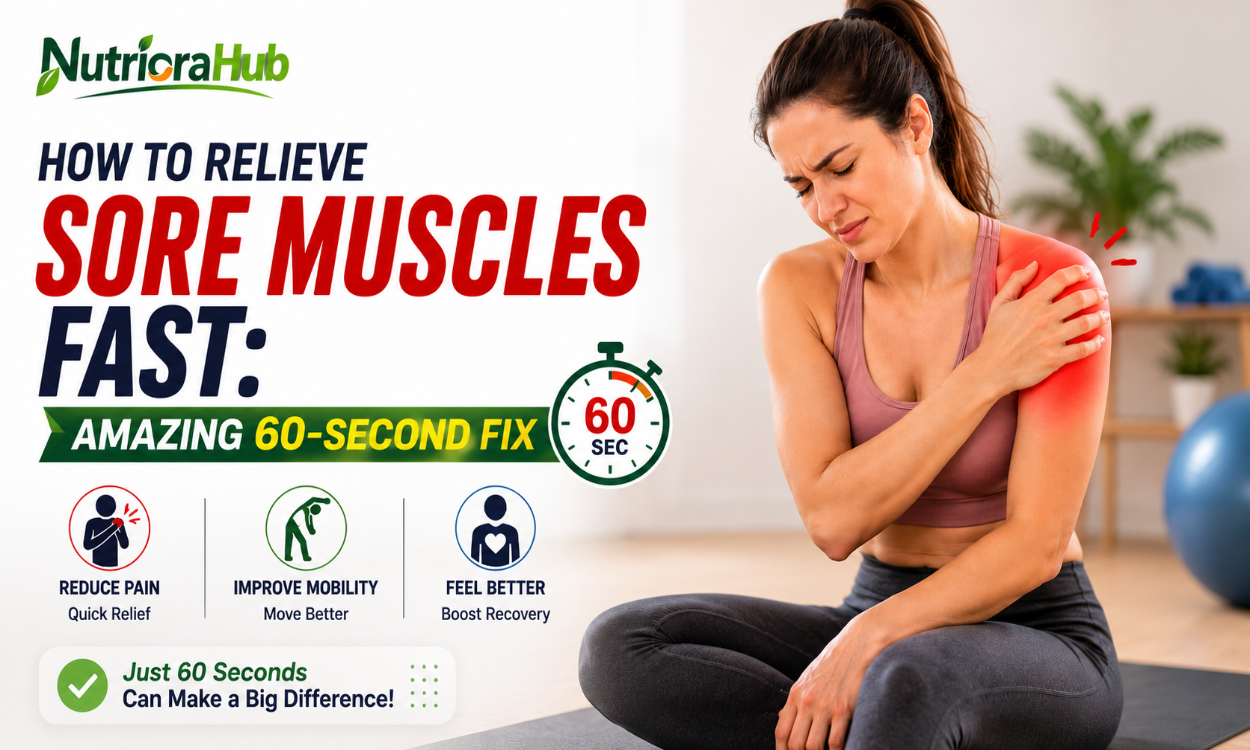
How to Relieve Sore Muscles Fast: Amazing 60-Second Fix
You know the feeling — you crushed a great workout yesterday, felt like a champion walking out of the gym, and then this morning you can barely lift your arms to brush your teeth. That deep, achy stiffness is your body’s way of telling you it worked hard, but it doesn’t make climbing stairs or sitting down any less painful. If you’re here searching for How to Relieve Sore Muscles, you’re definitely not alone, and the good news is there are real, effective ways to feel better fast.
This guide covers everything you need to know about How to Relieve Sore Muscles — the science behind why it happens, quick relief methods, longer-term recovery strategies, and answers to the questions people ask most. We’ll also break things down with tables, a pros and cons section, and practical daily habits you can start using today.
🛒 Sponsored: Want to recover faster after tough workouts? [Try Advanced Amino Formula here] —
Why Do Muscles Get Sore in the First Place?
Before diving into How to Relieve Sore Muscles, it helps to understand why soreness happens at all. That familiar ache — known medically as delayed onset muscle soreness, or DOMS — typically shows up 12 to 24 hours after a workout and peaks around 48 hours later. It happens when muscle fibers experience tiny amounts of microscopic damage during exercise, especially from new movements, increased intensity, or eccentric contractions like the lowering phase of a squat.
This isn’t a bad thing. In fact, this microscopic damage is part of how muscles rebuild themselves stronger. But knowing How to Relieve Sore Muscles during the recovery window can make the difference between feeling miserable and getting back to your routine comfortably. Let’s break down exactly How to Relieve Sore Muscles step by step, starting with the fastest options first.
How to Get Rid of Sore Muscles: Fast Relief Methods
If you’re wondering how to get rid sore muscles as quickly as possible, here are the methods that actually make a noticeable difference:
- Gentle movement — light walking or stretching increases blood flow to sore areas
- Warm baths or heating pads — heat relaxes tight muscles and eases stiffness
- Foam rolling — helps break up tension and improve mobility in sore tissue
- Hydration — dehydrated muscles recover more slowly and feel tighter
- Massage — increases circulation and can reduce the sensation of soreness
- Cold therapy — ice packs can help reduce inflammation shortly after intense exercise
Combining a few of these approaches together tends to work better than relying on just one when you’re trying to figure out how do i get rid of sore muscles overnight.
What Helps With Sore Muscles? A Closer Look at the Options
People often ask what helps with sore muscles beyond the basics, especially when soreness is severe. Here’s a breakdown comparing different relief methods:
| Method | How It Helps | Best For |
|---|---|---|
| Heat therapy | Relaxes muscle tension, improves blood flow | General stiffness, 24+ hours post-workout |
| Cold therapy | Reduces inflammation and swelling | Acute soreness, right after intense activity |
| Stretching | Improves flexibility, reduces tightness | Daily maintenance and prevention |
| Massage/foam rolling | Breaks up tension, boosts circulation | Deep, localized soreness |
| Active recovery | Keeps blood flowing without added strain | Days after a hard workout |
| Sleep | Allows the body to repair muscle tissue | Overall recovery and long-term progress |
What helps sore muscles most often comes down to a combination of rest, movement, and giving your body the nutrients it needs to actually repair itself — which is really the heart of How to Relieve Sore Muscles for good.
How to Ease Sore Muscles Through Daily Habits
Learning how to ease sore muscles for the long run comes down to building smart habits into your routine:
- Warm up properly before every workout to prepare muscles for stress
- Cool down and stretch after exercise instead of stopping abruptly
- Gradually increase workout intensity rather than jumping in too hard, too fast
- Stay consistently hydrated throughout the day, not just during workouts
- Prioritize 7-9 hours of quality sleep to support muscle repair
- Eat enough protein to give your muscles the building blocks they need
What to Do for Sore Muscles Right After a Workout
Knowing what to do for sore muscles immediately after exercise can actually reduce how bad the soreness gets later. In the first hour or two post-workout:
- Cool down with light movement instead of stopping cold
- Stretch gently while your muscles are still warm
- Rehydrate with water or an electrolyte drink
- Eat a balanced meal with protein and carbohydrates within a couple hours
- Consider a short cold shower or ice pack on particularly worked muscle groups
Taking these steps early often means less severe soreness the following day.
Should You Workout When Sore?
This is one of the most debated questions in fitness: should you workout when sore, or is rest always the better choice? The honest answer depends on the severity of your soreness and which muscles are involved.
Working out when sore is generally fine if the soreness is mild and you’re targeting a different muscle group than the one that’s sore. However, if the pain is severe, limits your range of motion, or feels sharp rather than achy, it’s smarter to rest or choose light active recovery instead.
Pros and Cons of Working Out While Sore
| Pros | Cons |
|---|---|
| Keeps your routine and momentum consistent | Can worsen soreness if pushed too hard |
| Increases blood flow, which may speed recovery | Risk of injury if form suffers due to stiffness |
| Builds mental discipline and consistency | May reduce workout performance and intensity |
| Works well for light, active recovery sessions | Not ideal for the same muscle group two days straight |
| Can improve mood through endorphin release | Severe soreness may signal you need more rest |
Muscle Recovery Supplements: Do They Actually Help?
Many people turn to a muscle recovery supplement to speed up the process, especially after intense training blocks. Common ingredients found in effective recovery supplements include branched-chain amino acids (BCAAs), magnesium, and electrolytes — all of which support muscle repair and reduce inflammation when paired with proper rest and diet.
While supplements can offer a helpful boost, they work best as an addition to good habits, not a replacement for sleep, hydration, and smart training. Choosing a quality muscle recovery supplement with clinically supported ingredients tends to make the biggest difference.
Nutrition’s Role in Muscle Recovery
Good Nutrition might be the single most underrated factor in how quickly sore muscles heal. A diet built around lean protein, healthy fats, and complex carbohydrates gives your body the raw materials it needs to repair damaged muscle fibers efficiently. High Protein Foods like chicken, eggs, fish, and legumes are especially important in the hours following a workout, when your muscles are primed to absorb nutrients for repair.
Platforms like NutrioraHub have made it easier for everyday people to understand how specific food choices connect directly to workout recovery, turning complicated dietary science into practical, doable habits that actually fit into a busy schedule.
Different Types of Soreness: Know the Difference
Not all muscle discomfort is the same, and understanding the type you’re dealing with can guide the right recovery approach:
- Acute soreness — shows up during or immediately after exercise, usually from lactic acid buildup, and fades within a few hours
- Delayed onset muscle soreness (DOMS) — the classic 24-48 hour ache from microscopic muscle fiber damage
- Chronic soreness — persistent discomfort lasting more than a week, which often signals overtraining or an underlying issue
- Sharp or localized pain — different from general soreness and more likely to indicate an actual strain or injury
Recognizing which category your discomfort falls into helps you choose the right recovery strategy instead of guessing.
Building a Simple Post-Workout Recovery Routine
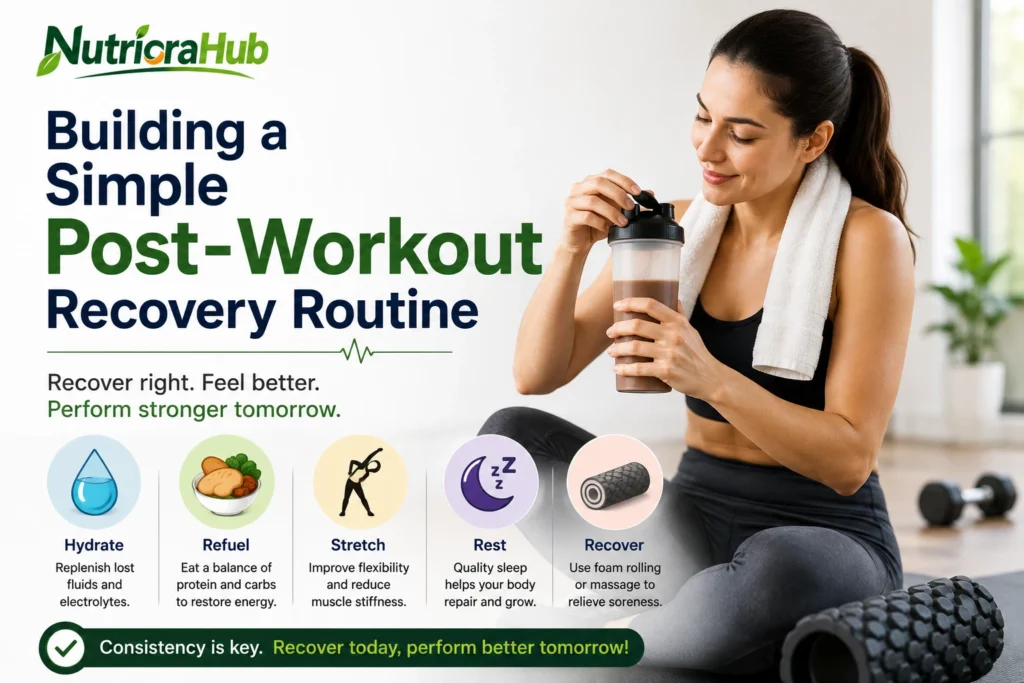
Consistency matters more than any single trick. Here’s a simple, realistic routine many people find effective:
| Timeframe | Action |
|---|---|
| Immediately after | Cool down with light movement and gentle stretching |
| Within 30-60 minutes | Rehydrate and eat a protein-rich snack or meal |
| That evening | Take a warm bath or use a heating pad on tight areas |
| Next morning | Light active recovery, like walking or gentle mobility work |
| Ongoing | Prioritize sleep, hydration, and balanced meals daily |
Sticking to a routine like this, even loosely, tends to noticeably reduce how long soreness lingers after tough workouts.
When Soreness Might Be Something More
Most muscle soreness is completely normal and resolves within a few days, but certain signs suggest it’s time to see a doctor rather than just relying on typical How to Relieve Sore Muscles tips and waiting it out:
- Soreness that lasts more than a week without improvement
- Severe swelling or visible bruising
- Sharp, localized pain rather than a general ache
- Dark urine, which can be a sign of a rare condition called rhabdomyolysis
- Weakness that doesn’t improve with rest
These symptoms could point to an actual injury or a more serious underlying issue that needs professional evaluation.
Trusted Resources to Learn More
If you want to explore How to Relieve Sore Muscles and recovery science further, these five well-established resources are excellent, reliable places to start:
| Resource | Focus Area |
|---|---|
| American College of Sports Medicine | Exercise science and recovery guidelines |
| Mayo Clinic | Symptoms, causes, and treatment guidance |
| Cleveland Clinic | Detailed condition explanations and prevention tips |
| National Academy of Sports Medicine (NASM) | Fitness and recovery best practices |
| World Health Organization (WHO) | Global physical activity guidelines |
Frequently Asked Questions
1. How to Relieve Sore Muscles the fastest way possible?
A combination of light movement, hydration, heat or cold therapy, and a proper diet tends to offer the fastest, most noticeable relief.
2. How to help sore muscles heal faster overnight?
Prioritizing sleep, staying hydrated, and eating a protein-rich meal before bed all support faster overnight muscle repair.
3. Should you workout when sore, or take a full rest day?
Light activity or a different muscle group is usually fine, but severe or sharp soreness is a signal to rest that specific area.
4. Is working out when sore ever dangerous?
It can be if the soreness limits your range of motion or masks an actual injury, so listening to your body’s signals matters.
5. Do muscle recovery supplement products actually speed up healing?
They can help support recovery when combined with good sleep, hydration, and a balanced diet, though they aren’t a magic fix on their own.
6. What helps sore muscles besides rest and stretching?
Massage, foam rolling, warm baths, proper hydration, and adequate protein intake all play a meaningful role in easing soreness.
7. How long does normal muscle soreness usually last?
Most soreness peaks around 48 hours after exercise and fully resolves within three to five days for most people.
Final Thoughts
Learning How to Relieve Sore Muscles isn’t about finding one magic trick — it’s about combining a few simple, consistent habits: gentle movement, proper hydration, good sleep, and giving your body the nutrients it needs to repair itself. Whether you’re dealing with soreness from a new workout routine or pushing through a tough training block, these small steps genuinely make a difference.
Soreness is a sign that your body is adapting and getting stronger, not a signal to fear. Listen to what your muscles are telling you, give yourself the recovery tools you need, and you’ll be back to feeling strong and moving freely in no time.