 11
11
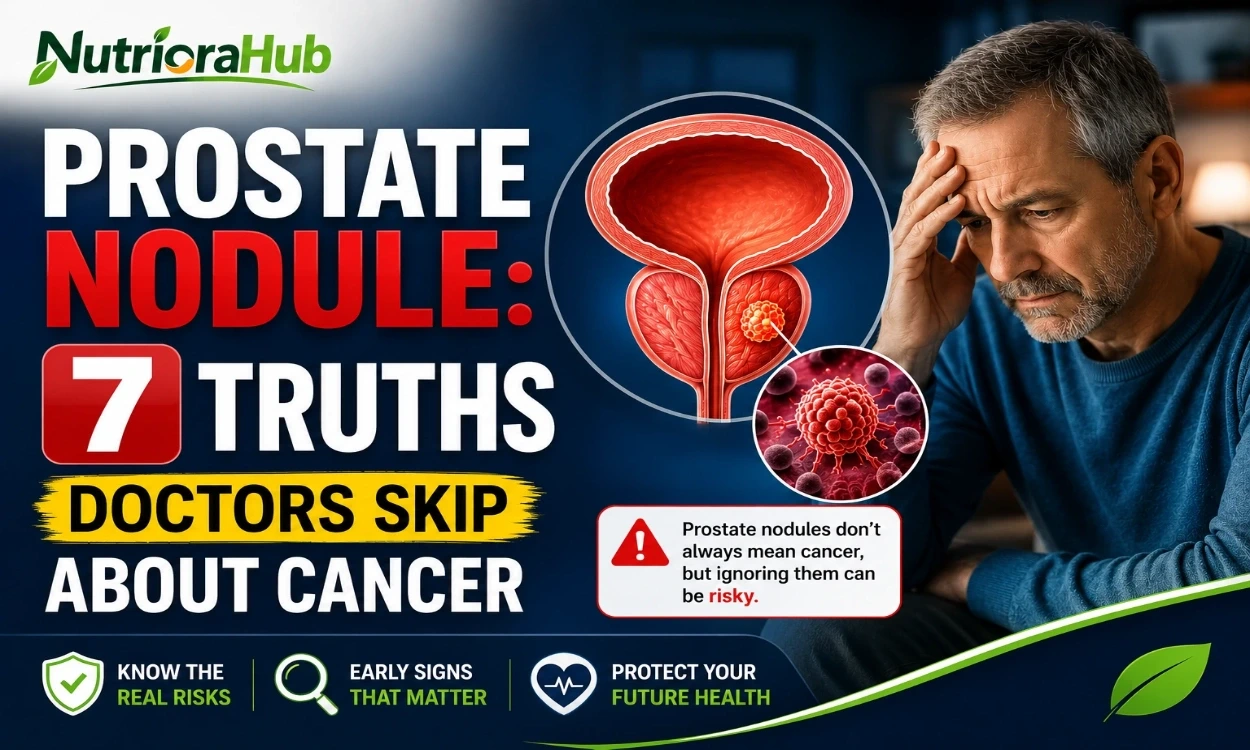
Finding out you have a prostate nodule can feel like the ground just shifted under your feet. One minute you’re sitting through a routine checkup, the next your doctor is saying words like “irregularity” or “mass” during a rectal exam, and suddenly your mind jumps straight to cancer. Take a breath. A prostate nodule is common, it does not automatically mean cancer, and understanding what it actually is puts you back in control of the conversation with your doctor.
This guide breaks down everything connected to a prostate nodule — what it is, how it’s found, what tests matter, what treatments look like, and what real men experience during recovery. We’ve also pulled in the most-searched questions men (and their partners) type into Google at 2 a.m. when they can’t sleep after a diagnosis.
A prostate nodule is simply a firm, distinct lump felt within the tissue of the prostate gland, usually discovered during a digital rectal exam (DRE) or seen on imaging like an MRI or ultrasound. Not every prostate nodule is cancerous — many are caused by benign prostatic hyperplasia (BPH), prostatitis (inflammation), scar tissue from a past infection, or calcification. However, because a prostate nodule can sometimes be the first physical sign of prostatic adenocarcinoma, doctors take every one seriously and usually recommend follow-up testing.
Here’s the key point: a prostate nodule is a finding, not a diagnosis. It tells your doctor “something feels different here,” and that difference needs to be investigated further — usually with blood work, imaging, and sometimes a biopsy.
Before we go deeper into the prostate nodule conversation, it helps to understand the organ we’re talking about.
The prostate purpose is to produce a fluid that nourishes and transports sperm, making it a core part of the male reproductive system. It sits just below the bladder and wraps around the urethra, which is why prostate problems so often affect urination.
Interestingly, this often raises the question: does women have a prostate gland? Anatomically, women don’t have a prostate in the traditional sense, but they do have a structure called the Skene’s glands, sometimes referred to as the “female prostate,” which serves a somewhat comparable function in fluid secretion.
A prostate nodule can develop for several reasons, and not all of them are alarming:
Once a prostate nodule is found, your doctor will almost always order a PSA (Prostate-Specific Antigen) blood test.
So, what is a dangerous PSA level? Generally, a PSA above 4.0 ng/mL raises concern, though “dangerous” really depends on your age, prostate size, and how quickly the number is rising over time (called PSA velocity). A level above 10 ng/mL is considered high risk for cancer.
Elevated PSA causes aren’t always cancer-related. Common non-cancer reasons include:
If you’ve already had surgery, you may be wondering: what is a dangerous PSA level after prostate removal? After a full prostatectomy, PSA should drop to nearly undetectable levels (below 0.1 ng/mL). Any rise after that point — even a small one — is watched closely, since the prostate tissue that normally produces PSA has been removed.
| Test | What It Checks | When It’s Used |
|---|---|---|
| Digital Rectal Exam (DRE) | Feels for a prostate nodule, texture, and size changes | Routine screening or when symptoms appear |
| PSA Blood Test | Measures prostate-specific antigen levels in blood | After an abnormal DRE or as annual screening |
| Transrectal Ultrasound (TRUS) | Produces a prostate image to map the gland | To guide biopsy or measure prostate volume |
| MRI | Detailed imaging of soft tissue | To assess suspicious areas before biopsy |
| Biopsy cancer prostate testing | Removes small tissue samples for lab analysis | To confirm or rule out prostatic adenocarcinoma |
A common question patients ask their general physician or gastroenterology office is: does GastroHealth do a DRE exam? Practices like GastroHealth primarily focus on digestive and colorectal health, and many of their providers are trained to perform a DRE as part of a broader colorectal or prostate screening, especially when checking for issues like hemorrhoids or bowel changes. Still, it’s best to confirm directly with your local GastroHealth office, since services vary by location.
Since we’re on the topic of screening tools, two related questions come up often: what can a colonoscopy detect, and how is bladder cancer diagnosed? A colonoscopy is primarily used to detect colorectal polyps, colon cancer, and inflammatory bowel conditions — it isn’t a direct test for the prostate, but doctors sometimes perform both exams around the same age window since screening recommendations often overlap. Bladder cancer, on the other hand, is typically diagnosed through urine tests, cystoscopy (a camera inserted into the bladder), and imaging like a CT urogram.
When a prostate nodule does turn out to be malignant, the diagnosis is almost always prostatic adenocarcinoma, which accounts for the vast majority of prostate cancer cases. It develops in the gland cells responsible for producing seminal fluid.
For readers researching in Spanish, a commonly searched phrase is sintomas de cancer de prostata — the symptoms of prostate cancer, which can include difficulty urinating, blood in urine or semen, pelvic discomfort, and in more advanced stages, bone pain. Early-stage prostatic adenocarcinoma, however, often has no symptoms at all, which is exactly why a routine finding like a prostate nodule matters so much.
One of the most common procedures for prostate issues, especially when BPH is causing urinary blockage, is the surgical procedure TURP (Transurethral Resection of the Prostate). It involves removing excess prostate tissue through the urethra, without any external incision.
Life expectancy after TURP surgery is generally excellent — TURP is primarily done for benign enlargement, not cancer, so it does not typically shorten lifespan. Most men return to normal activities within a few weeks and experience significant improvement in urinary symptoms.
| Pros | Cons |
|---|---|
| No external incision needed | Possible retrograde ejaculation |
| Fast symptom relief for urination | Temporary catheter use post-surgery |
| Shorter hospital stay than open surgery | Risk of bleeding or infection |
| Well-established, decades of clinical use | Not a treatment for cancerous prostate nodule cases |
It’s worth being honest here too: some online forums feature posts titled “prostate surgery ruined my life,” usually describing frustration with incontinence or erectile changes after treatment. These experiences are real, but they are not universal — outcomes vary widely depending on the surgeon’s experience, the surgery type, and the patient’s overall health. Discussing expectations honestly with your urologist beforehand reduces the chance of feeling blindsided later.
For prostate cancer that has spread beyond the gland, doctors often prescribe Lupron, a hormone therapy that lowers testosterone to slow cancer growth.
Side effects from Lupron shot use commonly include:
These side effects are usually manageable and often improve after treatment ends, though some men remain on Lupron for extended periods depending on cancer staging.
Yes — does an enlarged prostate affect a man sexually is one of the most searched questions for good reason. An enlarged prostate, whether from BPH or after treatment for a prostate nodule, can cause reduced ejaculate volume, discomfort during ejaculation, and in some cases erectile difficulty due to nerve or blood flow changes near the gland. The good news: many of these effects are manageable with medication, pelvic floor therapy, or lifestyle adjustments.
Awareness campaigns rely heavily on visual identity. The prostate cancer ribbon is light blue, chosen specifically to represent men’s health causes, similar to how pink represents breast cancer. The color of prostate cancer awareness — that same soft blue — appears on everything from charity walk t-shirts to hospital campaign banners every September, which is Prostate Cancer Awareness Month. Community screening initiatives, sometimes run under names like Snap ten worst foods for prostate health drives at local health fairs, aim to catch a prostate nodule early through free or low-cost DRE and PSA testing.
Some readers researching reproductive and urologic health also search terms like penile tumor pictures, penile cancer pictures, or vulvar cancer photos while trying to understand what abnormal symptoms look like. We’d gently steer you away from unverified images online — visual self-diagnosis is unreliable and can cause unnecessary panic or false reassurance. If you notice any unusual lump, sore, discoloration, or growth on the penis or vulva, the safest and most accurate step is an in-person exam with a urologist, gynecologist, or dermatologist who can assess it properly, order imaging if needed, and biopsy anything suspicious.
Diet plays a supporting role in prostate wellness. Good Nutrition rich in vegetables, healthy fats, and lean protein is associated with lower inflammation markers throughout the body, including the prostate. Overall Nutrition quality — not any single “miracle food” — appears to matter most in long-term studies. Including High Protein Foods like fish, legumes, and poultry supports muscle maintenance, especially important for men recovering from surgery like TURP. On a related note, many people don’t realize that ongoing stress affects far more than mood — a commonly asked wellness question is can stress increase cholesterol, and the answer is generally yes, since chronic stress can raise cortisol, which in turn can elevate LDL cholesterol over time.
For structured meal guidance and supplement education around men’s wellness, resources like NutrioraHub offer accessible content for readers trying to build sustainable, doctor-friendly nutrition habits.
No. A prostate nodule can result from BPH, prostatitis, calcification, or scar tissue. Only a biopsy can confirm whether it’s prostatic adenocarcinoma.
The prostate gland produces seminal fluid that nourishes and helps transport sperm during ejaculation, making it essential to male fertility.
Generally, anything above 4.0 ng/mL warrants further testing, and levels above 10 ng/mL are considered high risk, though context like age and prostate size matters.
It depends entirely on what the biopsy shows. Benign nodules may just need monitoring, while cancerous ones are staged and treated based on aggressiveness.
Nodules caused by inflammation or infection can shrink once the underlying issue is treated with antibiotics or anti-inflammatories. Nodules from BPH or cancer typically need active management.
Normal prostate volume is around 20–30 cc in younger men, gradually increasing with age due to natural gland enlargement.
For deeper, medically reviewed information beyond this guide, these five authoritative sources are excellent starting points:

Living with the uncertainty of a prostate nodule diagnosis often pushes men to take a closer look at their daily habits — and that includes what they put into their bodies. This is where Prosta Peak comes in.
Prosta Peak Prostate Health Supplement is formulated for men who want to give their prostate consistent, everyday support through natural ingredients rather than waiting for a problem to become urgent. It’s designed to complement — never replace — the medical monitoring that a prostate nodule requires, fitting easily into a daily wellness routine alongside good nutrition and regular checkups.
If you’re already working with your doctor on a prostate nodule finding, Prosta Peak can be a simple, proactive addition to your routine while you focus on the things that matter: consistent screening, honest conversations with your urologist, and small daily habits that support long-term prostate wellness.

A prostate nodule finding can feel frightening in the moment, but it’s also an opportunity — a chance to catch something early, ask better questions, and take charge of your long-term health. Whether your prostate nodule turns out to be nothing more than a benign finding or requires further treatment, staying informed is the single best thing you can do for yourself right now.
This article is for informational purposes only and is not a substitute for professional medical advice, diagnosis, or treatment. Always consult a qualified healthcare provider regarding a prostate nodule or any other health concern.