 11
11
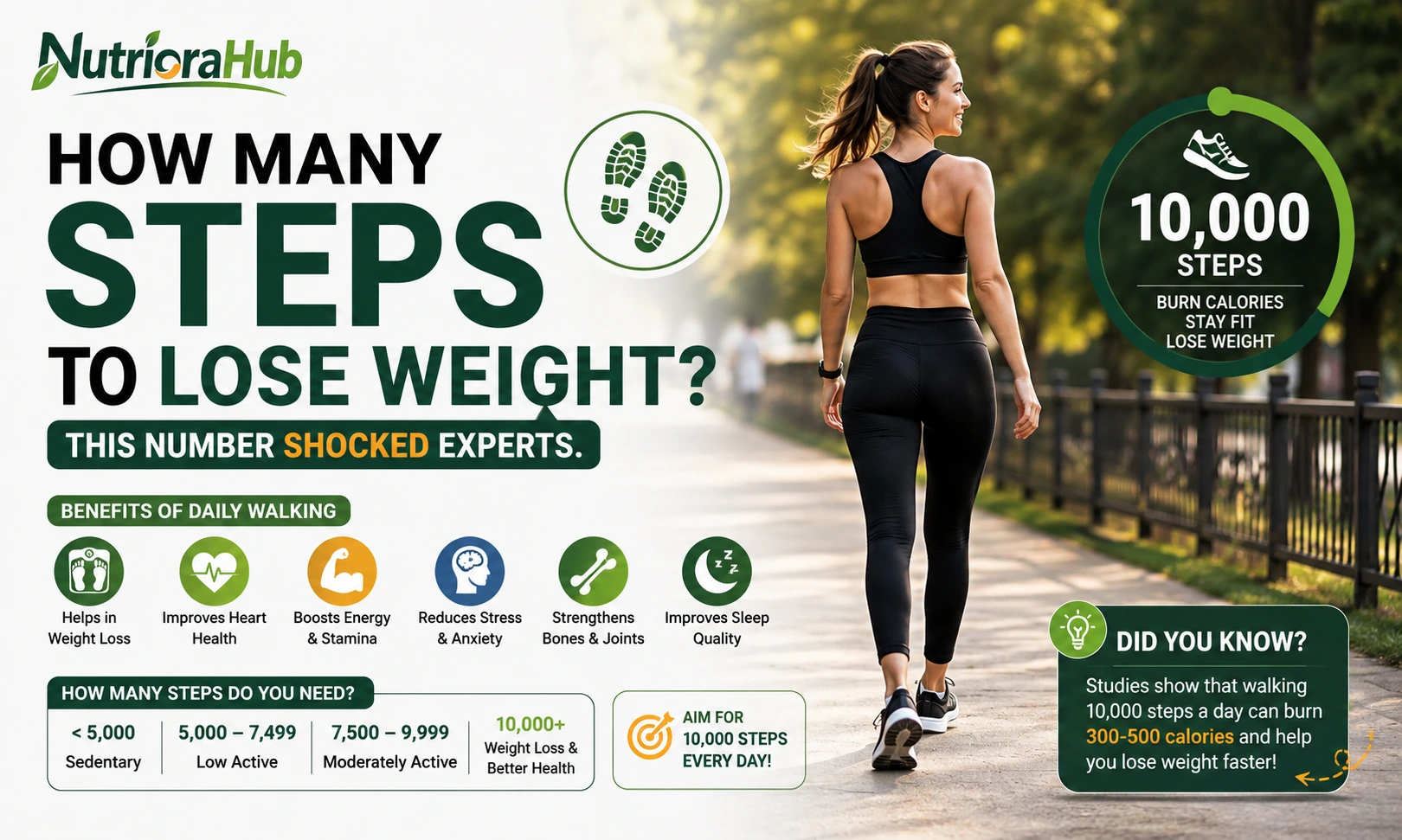
If you’ve ever laced up your sneakers and wondered, “How many steps to lose weight, really?” — you’re not alone. For years, the fitness world clung to the magic 10,000-step rule like it was gospel. But new research has flipped that assumption on its head, and honestly, even seasoned trainers and dietitians were caught off guard. The real number that actually moves the scale is lower than most people expect, and it’s changing the way coaches, doctors, and everyday walkers think about daily movement.
At NutrioraHub, we spend a lot of time digging through studies so you don’t have to, and this particular finding stopped us in our tracks. So let’s talk honestly about how many steps to lose weight, why the old advice was overly simplified, and what you should actually be doing starting today.
Multiple studies published over the last few years suggest that meaningful weight loss and health improvements can begin around 6,000 to 8,000 steps a day — not 10,000. That’s a huge relief for people who’ve felt discouraged trying to hit an arbitrary five-figure goal. When researchers asked how many steps to lose weight in a way that was sustainable for the average adult, the answer wasn’t about chasing a huge number. It was about consistency, intensity, and pairing movement with Good Nutrition.
This doesn’t mean 10,000 steps is bad — more movement is almost always better for cardiovascular health. But if your only goal is fat loss, the “shocking” part of this discovery is that you don’t need to walk yourself into exhaustion to see results. It’s genuinely one of the more encouraging Weight Loss Tips to come out of recent research, because it makes the goal feel achievable instead of overwhelming.
Search interest in “how many steps to lose weight” has spiked dramatically, and it’s easy to see why. Between wearable fitness trackers, smartwatches, and phone apps that count every step automatically, people are more aware of their daily movement than ever before. But awareness without context can be frustrating. Seeing “4,321 steps” on your screen means nothing if you don’t know whether that number is helping or hurting your goals.
That’s exactly why so many people type “how many steps to lose weight” into a search bar every single day. They want a real, honest answer — not a marketing slogan from a shoe company. And the honest answer is: it depends on your starting point, your diet, your body composition, and your consistency over time.
Here’s something that doesn’t get talked about enough: to discuss the role of behavior in physical fitness levels, we have to admit that steps alone are just a symptom of bigger habits. Someone who walks 8,000 steps a day because they take the stairs, park farther away, and go for an after-dinner walk is engaging in a completely different behavioral pattern than someone who forces themselves onto a treadmill once a week to “catch up.”
This is really the core of how many steps to lose weight questions, because behavior — not willpower — is what determines whether a step goal sticks. If your environment, schedule, and mindset support movement, hitting your daily target becomes automatic. If they don’t, even knowing exactly how many steps to lose weight won’t matter much, because the habit won’t survive a busy Tuesday.
Let’s break down some of the most cited findings in a simple table so you can see for yourself where the how many steps to lose weight numbers really come from.
| Study / Source | Step Range Studied | Key Finding |
|---|---|---|
| JAMA Internal Medicine (women’s health cohort) | 4,400 – 7,500 steps/day | Lower mortality risk plateaued around 7,500 steps |
| Journal of the American College of Cardiology | 8,000 – 10,000 steps/day | Reduced risk of obesity and cardiovascular disease |
| Lancet Public Health meta-analysis | 6,000 – 8,000 steps/day | Significant fat-loss benefit when combined with diet changes |
| University-based walking trial | 5,000 – 7,000 steps/day | Noticeable improvement in insulin sensitivity |
| Sports Medicine review | 7,000+ steps/day | Better mood, energy, and adherence to fitness routines |
As you can see, the answer to how many steps to lose weight isn’t one single magic number — it’s a range, and most of the meaningful benefits start showing up well before you hit five digits.
If you’re asking, “how many steps should I walk to lose weight,” you’re essentially asking how many steps to lose weight in the most practical, day-to-day sense. A good starting benchmark is 7,000 to 9,000 steps a day for most adults, assuming you’re also managing your calorie intake. This range burns roughly 300–500 extra calories depending on your weight, pace, and terrain, which lines up nicely with the calorie deficit needed for steady, sustainable fat loss.
Of course, if you’re just starting out and currently averaging 3,000 steps a day, jumping straight to 9,000 might feel impossible. That’s okay. The real answer to how many steps to lose weight for beginners is simple: add 500–1,000 steps to your current average each week until you reach a comfortable, sustainable range.
A lot of people love using a how many steps a day to lose weight calculator because it takes the guesswork out of the equation. These calculators typically factor in your current weight, target weight, activity level, and timeline to give you a personalized daily step goal. While no calculator is perfect, they’re a useful starting point for anyone who feels overwhelmed trying to figure out how many steps to lose weight on their own.
If you don’t want to use an app, a rough manual estimate works too: multiply your weight in pounds by 0.04 to estimate calories burned per 1,000 steps, then work backward from your target weekly deficit. It’s not exact science, but it gets you in the right ballpark.
This is probably the most common phrasing of the question, and it deserves a direct answer. If you’re wondering how many steps do I need to lose weight, you’re really asking the same core question as how many steps to lose weight — the honest response is that it depends on your total daily energy expenditure versus your caloric intake. Walking alone, without any dietary changes, tends to produce modest results. Walking combined with mindful eating and adequate protein intake is where the real transformation happens.
Most nutrition coaches agree that pairing your step count with High Protein Foods throughout the day helps preserve lean muscle while you’re in a calorie deficit, which keeps your metabolism from slowing down as dramatically as it would on a low-protein diet.
One pound of body fat is roughly equal to 3,500 calories, which gives us a more precise way to answer how many steps to lose weight one pound at a time. So how many steps to lose a pound, exactly? Depending on your weight and walking pace, 1,000 steps burns approximately 30–50 calories. That means you’d need somewhere between 70,000 and 116,000 steps to burn through a single pound of fat through walking alone — which sounds like a lot until you spread it across a week or two.
| Body Weight | Calories Burned per 1,000 Steps | Steps Needed to Burn 3,500 Calories |
|---|---|---|
| 130 lbs | ~30 calories | ~116,000 steps |
| 160 lbs | ~40 calories | ~87,000 steps |
| 190 lbs | ~50 calories | ~70,000 steps |
| 220 lbs | ~60 calories | ~58,000 steps |
Broken down daily, that’s roughly 8,000–12,000 extra steps per day for about a week to lose one pound through walking alone — again, faster and easier when paired with dietary adjustments.

This is a sensitive but common question, and it’s a little different from the standard how many steps to lose weight conversation. Can you lose weight while pregnant? In most cases, doctors do not recommend intentional weight loss during pregnancy, especially in the second and third trimesters, because your body needs extra energy and nutrients to support fetal development. However, light-to-moderate walking is generally considered safe and even encouraged for most healthy pregnancies, as it supports circulation, mood, and easier labor and delivery.
Losing weight while pregnant is typically only advised under direct medical supervision, usually in cases involving obesity-related health risks. If you’re pregnant and concerned about your weight, the safest approach is a conversation with your OB-GYN rather than trying to calculate how many steps to lose weight on your own. Some expecting mothers also deal with complications like being pregnant with low blood sugar, which requires an entirely different nutritional strategy than a typical weight-loss plan, so medical guidance is essential here.
The answer to how many steps to lose weight also shifts depending on your age and current fitness level, which is why a one-size-fits-all number never tells the whole story.
| Age Group / Fitness Level | Recommended Daily Steps | Notes |
|---|---|---|
| Sedentary beginners | 3,000 – 5,000 | Build gradually to avoid injury |
| Active adults (20–40) | 7,000 – 10,000 | Sweet spot for fat loss and heart health |
| Adults 40–60 | 6,000 – 8,000 | Focus on joint-friendly pacing |
| Adults 60+ | 5,000 – 7,000 | Prioritize balance and consistency over speed |
| Athletes / high performers | 10,000+ | Combined with strength training for best results |
It’s incredibly frustrating to hit your step count, know exactly how many steps to lose weight you’re supposed to be taking, and still not see the scale move. If you’re working out but not losing weight, the culprit is usually hidden calories, inconsistent tracking, water retention, or muscle gain offsetting fat loss. Walking is powerful, but it’s not a free pass to eat however you want. Many people unknowingly eat back the calories they burn, which cancels out the deficit entirely.
Another overlooked factor is stress and sleep. Poor sleep quality raises cortisol levels, which can make your body hold onto fat even when you’re technically doing everything right. If you’ve mastered how many steps to lose weight but the results still aren’t showing, it might be time to look beyond the pedometer and examine your overall lifestyle, including strategies for the Best Way to Lose Belly Fat, which almost always involves a mix of walking, strength training, and sleep hygiene.
Medication is another piece of the puzzle that changes the answer to how many steps to lose weight for some people. With so much buzz around injectable weight-loss medications, a lot of readers ask, “is GLP 1 the same as Ozempic?” The short answer is no — GLP-1 refers to a class of hormones and medications (glucagon-like peptide-1 receptor agonists), while Ozempic is one specific brand-name drug within that class. Other medications like Wegovy and Mounjaro also fall under similar hormone-targeting categories, though they work slightly differently.
These medications can significantly reduce appetite, which is why some people combine them with a walking routine to maximize results. But even on medication, understanding how many steps to lose weight still matters, because movement supports muscle retention and long-term metabolic health that medication alone can’t fully replicate.
Before you build your whole routine around one number, it helps to weigh the upsides and downsides of using step counts to answer how many steps to lose weight.
| Pros | Cons |
|---|---|
| Easy to track with a phone or smartwatch | Doesn’t account for diet quality |
| Low-impact and accessible for most fitness levels | Can plateau without added intensity |
| Encourages consistent daily movement | Doesn’t measure muscle vs. fat loss |
| Supports heart health and mental clarity | Can be misleading if steps are “lazy” (very slow pace) |
| No equipment or gym membership required | May not be sufficient alone for significant weight loss |
| Great for beginners easing into fitness | Advanced exercisers may need added resistance training |
Weight loss doesn’t happen in a vacuum, and your body often sends other signals worth paying attention to along the way as you work out how many steps to lose weight. For instance, some people managing blood sugar concerns should understand what is diabetes and how walking affects insulin response, since regular movement is one of the most effective non-medication tools for improving glucose control.
Walking regularly can also help with circulation-related complaints such as leg pain at night, which is sometimes linked to poor blood flow or sitting too much during the day — another quiet benefit of hitting your daily step goal consistently.
And for those focused on overall wellness rather than just the scale, simple lifestyle upgrades like learning how to whiten teeth naturally or practicing meditation techniques for anxiety often go hand in hand with a walking habit, since people who commit to one healthy behavior tend to naturally pick up others.
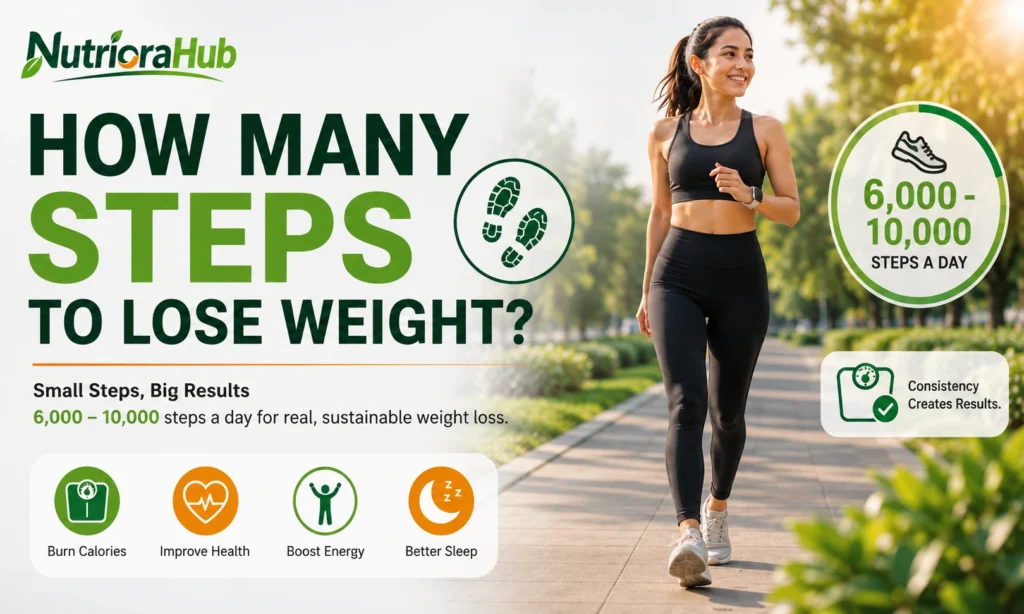
So, how many steps to lose weight? Based on everything the research shows, most adults will see real, sustainable results somewhere between 6,000 and 10,000 steps a day, especially when that movement is paired with good nutrition, adequate protein, quality sleep, and stress management. The “shocking” part isn’t that the number is complicated — it’s that it’s actually simpler and more achievable than the fitness industry has led people to believe for the last decade.
Whether you’re just starting your first 3,000-step days or you’re already a seasoned walker chasing 10,000+, the most important thing is consistency. Behavior beats intensity. Showing up daily beats one heroic weekend hike. And once you understand how many steps to lose weight for your specific body and lifestyle, the rest becomes a matter of habit, not guesswork.
If you want to dig deeper into the science behind how many steps to lose weight, these trusted organizations are a great place to start.
| Resource | Link |
|---|---|
| Centers for Disease Control and Prevention (CDC) – Physical Activity | https://www.cdc.gov/physical-activity-basics/index.html |
| Mayo Clinic – Walking for Fitness | https://www.mayoclinic.org/healthy-lifestyle/fitness/in-depth/walking/art-20046261 |
| Harvard T.H. Chan School of Public Health – Nutrition Source | https://www.hsph.harvard.edu/nutritionsource/ |
| American Heart Association – Fitness Basics | https://www.heart.org/en/healthy-living/fitness |
| National Institutes of Health (NIH) – Weight Management | https://www.niddk.nih.gov/health-information/weight-management |
Start with 4,000–5,000 steps a day and gradually build up. Trying to jump straight to a high number often leads to burnout or injury, which defeats the purpose.
Yes — plateaus often mean your body has adapted to your current routine, so increasing intensity, adding strength training, or reassessing your calorie intake can help push past it.
Walking is a great foundation, but combining it with strength training helps preserve muscle and boosts your metabolism, making the answer to how many steps to lose weight even more effective over time.
Most people notice changes in energy and mood within two weeks, with visible weight changes typically showing up around the four-to-six-week mark, assuming consistency and a modest calorie deficit.
Not necessarily — most smartphones have built-in step counters that are reasonably accurate for everyday tracking purposes.
It’s possible but slower. Diet plays a bigger role in weight loss than exercise alone, so pairing your steps with mindful eating dramatically speeds up results.
Aiming for 49,000–63,000 steps per week (roughly 7,000–9,000 daily) is a realistic, sustainable target for most healthy adults.
Not drastically. The core math around calories burned per step is similar, though body composition, muscle mass, and hormonal factors can shift the numbers slightly from person to person.
At the end of the day, the answer to how many steps to lose weight isn’t about chasing a perfect number — it’s about building a habit you can stick with for years, not just weeks.