 11
11
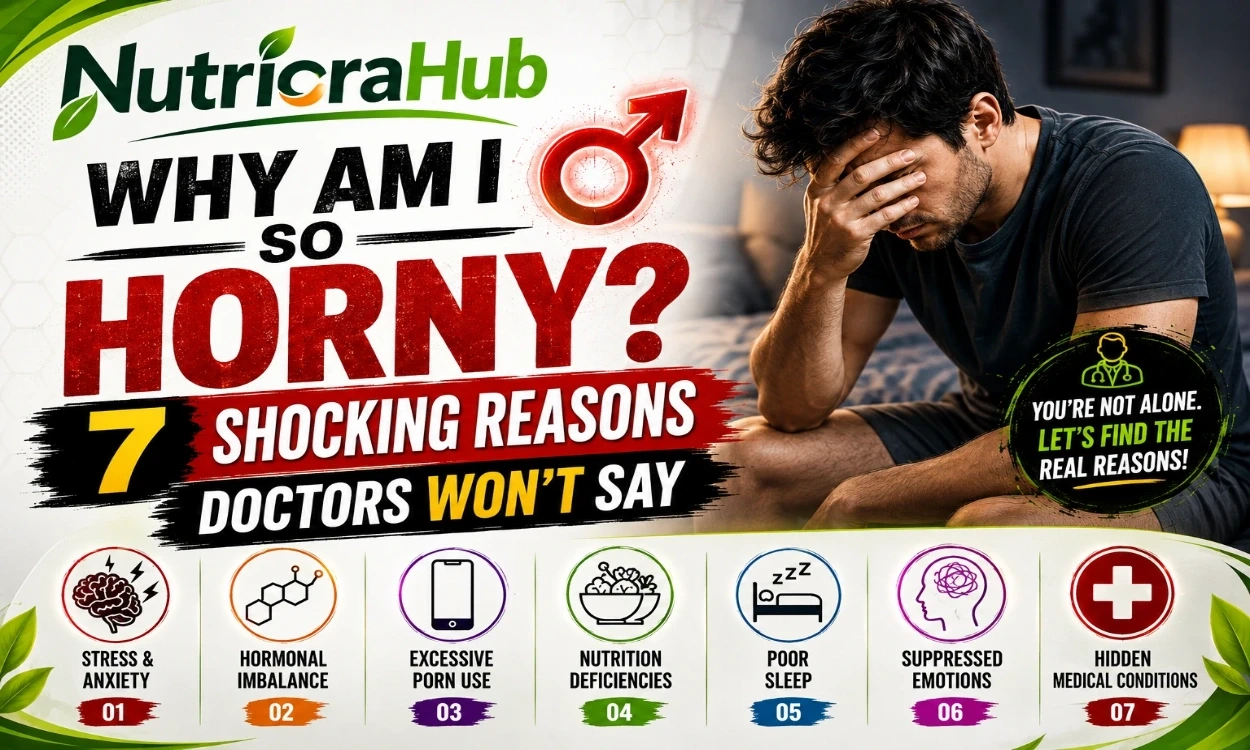
If you’ve ever found yourself typing “why am I so horny” into Google at 2 AM, you’re not broken, and you’re definitely not alone. Millions of people — men and women, teenagers and seniors, single and married — ask themselves this exact question at some point in their lives. Feeling a sudden spike in sexual desire can be confusing, especially when it seems to come out of nowhere.
In this guide, we’re going to break down everything you need to know about sexual health, libido, and what’s actually going on in your body when you feel unusually turned on. We’ll answer the big question — why am I so horny — from every angle: hormones, psychology, relationships, and medical conditions. Let’s get into it.
Before we dive into why am I so horny, let’s start with the basics. What is sexual intercourse? In simple terms, sexual intercourse refers to the physical act of sexual activity between partners, most commonly involving penetrative sex, though the term is also used more broadly to describe any intimate sexual contact between two consenting adults. It’s a natural part of human biology tied to reproduction, pleasure, bonding, and emotional intimacy.
Understanding this foundation helps explain why your body sometimes sends strong signals telling you it’s “ready” — which brings us right back to the question so many people are quietly Googling: why am I so horny?
So, why am I so horny all of a sudden? There isn’t just one answer — your libido is influenced by a mix of biology, lifestyle, and emotional state. Here are the most common (and often surprising) reasons.
Testosterone and estrogen are the two hormones most responsible for sex drive. When these hormones spike — during ovulation, certain times of the month, or even certain times of day (testosterone is typically highest in the morning) — you may notice you’re so horny without any obvious trigger.
Stress affects everyone differently. For some, it kills libido entirely. For others, stress hormones like cortisol and adrenaline can actually heighten arousal as a coping mechanism, leaving you wondering why am I always horny during a stressful week at work.
Ironically, going without sex for a while can make your body crave it more intensely. This is a completely normal biological response, not a sign that something is wrong with you.
What you eat plays a bigger role in your libido than most people realize. Foods rich in zinc, omega-3 fatty acids, and antioxidants can naturally boost sex drive, while poor Nutrition can suppress it. Sites like NutrioraHub often cover how Good Nutrition and a diet built around High Protein Foods can support hormonal balance and overall sexual wellness.
Poor sleep disrupts hormone production, and paradoxically, both sleep deprivation and oversleeping have been linked to changes in libido.
Certain medications, birth control pills, antidepressants, and underlying health conditions can increase or decrease sexual desire.
New relationships, feelings of emotional closeness, or even anxiety can trigger a heightened sex drive. This is one of the lesser-discussed reasons people ask why am I so horny during emotionally intense periods of their life.
What is to be horny, exactly? Being “horny” is the colloquial term for experiencing sexual arousal or desire. It’s a natural physiological and psychological state where your body signals readiness for Human sexual activity through increased blood flow, heightened sensitivity, and mental preoccupation with sex. It is completely normal and healthy — it only becomes a concern when it interferes with daily life.
If you find yourself asking why am I so horny all the time, it could be a combination of the factors above, or in rare cases, something more specific. Here’s a quick breakdown:
| Possible Cause | Description |
|---|---|
| High Testosterone/Estrogen | Naturally elevated hormone levels increase desire |
| New Relationship Energy | Early-stage relationships often spike libido |
| Reduced Stress in Other Areas | More mental bandwidth for arousal |
| Certain Medications | Some antidepressants or hormonal treatments increase libido |
| PGAD (rare) | A medical condition causing persistent arousal (explained below) |
| Diet & Exercise | Improved circulation and hormone regulation |
If you constantly ask yourself why am I so horny, and it’s genuinely disruptive, it may be worth speaking to a doctor to rule out underlying causes.
What is PGAD? PGAD stands for Persistent Genital Arousal Disorder, a rare condition where a person experiences ongoing, spontaneous, and often unwanted physical arousal that isn’t relieved by orgasm. Unlike normal fluctuations in libido, PGAD can be distressing and typically requires medical evaluation. If you feel like your arousal is constant, intrusive, and not tied to any emotional or sexual trigger, this is one condition worth discussing with a healthcare provider — it’s very different from simply having a high sex drive.
People searching why am I so horny often also want to understand what sex actually feels like physically. Here’s a general, respectful breakdown.
What does intercourse feel like for a guy? Most men describe it as an intense combination of physical pleasure, warmth, and building tension that peaks during orgasm. What does sex feel like for a male varies from person to person, but common descriptions include increased sensitivity, rhythmic pleasure, and a strong emotional release at climax. What does sex feel like for a man is also closely tied to emotional connection with a partner, not just physical sensation.
What does sex feel like for a woman is often described differently — many women report a gradual build-up of pleasure involving both physical and emotional intimacy. What does a vagina feel like during arousal changes too; increased blood flow leads to warmth, swelling, and heightened sensitivity. As for what does pussy feel like — a term often searched casually — arousal causes natural lubrication and increased sensitivity, making touch more pleasurable during intimacy. What does sex feel like as a woman ultimately depends on comfort, arousal level, and emotional connection with a partner.
How important is sex in a relationship? While it’s not the only pillar of a healthy relationship, sexual intimacy plays a meaningful role in bonding, communication, and emotional closeness between partners. Studies consistently show that couples who maintain physical intimacy report higher relationship satisfaction — though quality matters far more than quantity.
| Pros | Cons |
|---|---|
| Stronger emotional bonding with your partner | Can create pressure if desire levels mismatch |
| Reduces stress and boosts mood | May lead to frustration if unmet |
| Improves sleep quality | Can be mistaken for a deeper issue if excessive |
| Increases confidence and body positivity | Requires open communication to manage |
| Natural release of oxytocin and dopamine | Social stigma around discussing high libido |
What does sexually active mean? Being sexually active simply means a person is currently engaging in sexual activity, whether occasionally or regularly. It doesn’t necessarily mean daily activity — it just reflects that someone participates in sexual relationships as opposed to being abstinent.
What age do females become sexually active? This varies enormously by country, culture, and individual choice. In the U.S., research generally shows the average age of first sexual activity falls somewhere in the late teens, though this is deeply personal and there’s no “correct” timeline — what matters most is consent, safety, and readiness.
If you’re wondering how can make love in a way that goes beyond the physical, here are a few tips:
How often does a couple have intercourse? This differs based on age, relationship length, and lifestyle. Here’s a general overview:
| Relationship Stage | Average Frequency |
|---|---|
| New relationships (0–1 year) | 3–5 times per week |
| Established couples (2–5 years) | 1–3 times per week |
| Long-term marriages (5+ years) | 1–2 times per week |
| Couples 50+ | A few times per month |
How often a married couple should have intercourse isn’t a fixed number — research suggests that once a week is a common benchmark for satisfaction, but what matters most is that both partners feel fulfilled, not hitting a specific quota. How often do married couples have sex tends to decline naturally over time due to work, stress, kids, and routine, which is completely normal.
People phrase this question in many ways — why am i sohorny, why am i horny all the time, why am i always horny — but they’re all asking the same core thing: is it normal to feel this level of desire, and what’s causing it? As covered above, the answer usually comes down to hormones, lifestyle, emotional state, or relationship dynamics.
If your arousal feels overwhelming or poorly timed, here’s how to stop being horny in healthy ways:
Sexual health doesn’t exist in isolation — it’s deeply tied to your overall physical and mental wellbeing. Chronic stress, for instance, doesn’t just affect your libido; interestingly, some research has explored whether Can Stress Increase Cholesterol, since prolonged cortisol elevation may influence lipid levels over time. This is a good reminder that sexual wellness, nutrition, sleep, and mental health are all interconnected systems — not separate issues.
It’s usually hormonal fluctuations, stress response, or simply a natural increase in libido — not necessarily a sign of a problem.
Yes, for many people this is completely normal, especially in younger age groups or new relationships.
Physically and emotionally, the experience differs — men often describe a build-up toward a defined climax, while women often describe a more gradual, layered experience of pleasure.
PGAD is a rare medical condition involving persistent, unwanted arousal. If your arousal feels uncontrollable and distressing, consult a doctor.
Exercise, mindfulness, a balanced diet, adequate sleep, and healthy sexual release (solo or with a partner) can all help regulate desire.
There’s no universal number — what matters is mutual satisfaction, not frequency alone.
For further reading and professional medical guidance on Sexual stimulation health, libido, and related conditions, these are reputable, well-established resources:
At the end of the day, asking why am I so horny is a completely valid and common question. Your sex drive is shaped by hormones, lifestyle, emotional state, and relationship dynamics — and fluctuations are a normal part of being human. If your libido ever feels disruptive, uncontrollable, or paired with unusual symptoms, don’t hesitate to speak with a healthcare professional. Understanding your body is the first step toward a healthier, more confident relationship with your own Human sexuality.