 11
11
You look in the mirror one morning and there they are — Red Eyes staring back at you. Maybe you feel fine otherwise, maybe there’s a slight sting, or maybe you’re wondering why this happened overnight without warning. Red Eyes are one of the most common things people search about, yet most articles online either oversimplify it or skip straight past what actually matters.
This guide takes a real, honest look at Red Eyes — what causes them, when they’re harmless, when they might signal something more serious, and what you can actually do about it. We’ll also walk through practical daily habits, a comparison table of causes, pros and cons of common remedies, and answers to the questions people ask most.
At the simplest level, Red Eyes happen when the tiny blood vessels on the surface of your eye become swollen or irritated, making the white part of the eye look pink or red instead of clear. Sometimes it’s just one eye. Sometimes it’s both. Sometimes it’s mild redness, and other times your eyes red appearance is dramatic enough that strangers ask if you’re okay.
If you’ve ever typed “what is the reason for red eyes” into a search bar late at night, you’re definitely not alone. It’s one of the most searched eye symptoms out there, and for good reason — it can stem from dozens of different causes, ranging from something as simple as lack of sleep to something that genuinely needs medical attention.
A common and confusing version of this issue is when only one eye is affected. People often ask, “why is one of my eyes red” while the other looks completely normal. This usually points to something localized — like an eyelash poking the eye, a small injury, a foreign particle, or early pink eye that hasn’t spread yet.
When one side of the eye is red, it’s usually because the irritation, infection, or minor trauma affected that eye specifically, rather than something systemic affecting your whole body. That said, if the redness comes with pain, blurry vision, or sensitivity to light, it’s not something to brush off — a same-day visit to an eye doctor is the safer move.
There’s a difference between mild pinkness and a truly eye is red and bloodshot appearance, where you can clearly see thick, web-like red veins in eyes across the white area. This “bloodshot” look usually means the blood vessels have dilated significantly, often from:
A sudden bloodshot eye that appears out of nowhere, especially with no obvious trigger like allergies or lack of sleep, deserves a bit more attention. It could be as harmless as a burst blood vessel, or it could point to elevated blood pressure, an infection, or minor trauma you didn’t notice at the time.
Sometimes it’s not general redness but a distinct red spot in eye that catches your attention — a small, defined patch of red against the white background. This is most often what’s called a subconjunctival hemorrhage, which happens when a tiny blood vessel just under the surface of the eye bursts.
It looks alarming, but in most cases, a red spot in eye like this is completely painless and harmless, healing on its own within one to two weeks, much like a bruise. It can happen from something as small as a strong sneeze, cough, rubbing your eyes too hard, or even straining while lifting something heavy.
People frequently ask what causes bloodshot eyes, expecting one single answer — but the truth is it’s rarely just one thing. Here’s a breakdown of the most common categories:
| Category | Common Triggers |
|---|---|
| Lifestyle | Poor sleep, excessive screen time, alcohol, smoking |
| Environmental | Dust, smoke, pollen, dry air, chlorine (swimming) |
| Medical | Conjunctivitis (pink eye), dry eye syndrome, uveitis |
| Physical | Rubbing eyes, minor trauma, contact lens misuse |
| Other | High blood pressure, allergies, certain medications |
Understanding what can cause bloodshot eyes in your specific case usually comes down to noticing patterns — does it happen after a late night, after wearing contacts too long, or completely randomly? That pattern is often the biggest clue.
| Remedy | Pros | Cons |
|---|---|---|
| Cold compress | Fast relief, reduces swelling, free and easy | Temporary fix, doesn’t treat root cause |
| Artificial tears | Great for dryness-related Red Eyes, widely available | Won’t help with infections or allergies |
| Antihistamine eye drops | Effective for allergy-related redness | Can cause rebound redness if overused |
| Reducing screen time | Long-term improvement, prevents strain | Not always practical for work-related use |
| Seeing a doctor | Accurate diagnosis, proper treatment | Takes time, may involve a co-pay or wait |
| Avoiding contact lenses temporarily | Lets the eye heal, reduces irritation risk | Inconvenient if lenses are your daily routine |
Small daily changes can make a real difference in how often you deal with Red Eyes:
It’s easy to overlook, but what you eat plays a real role in preventing Red Eyes and supporting long-term eye health. Good Nutrition rich in vitamin A, C, and E, along with omega-3 fatty acids, supports tear production and reduces inflammation. High Protein Foods like eggs, fish, and legumes also provide zinc and amino acids that help maintain healthy eye tissue.
Communities and platforms like NutrioraHub have made it simpler for people to connect everyday eating habits with specific health outcomes, including eye comfort and reduced irritation. Pairing smart dietary choices with good sleep and screen habits tends to produce the most noticeable, lasting improvement.
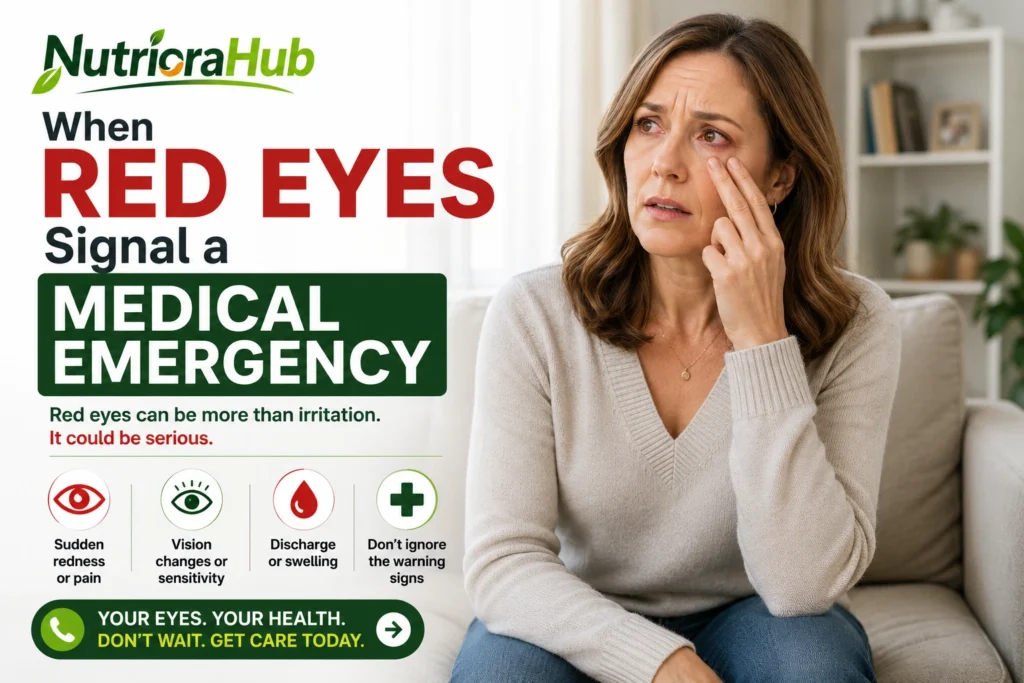
While most cases of Red Eyes are harmless and resolve on their own, certain warning signs mean you shouldn’t wait it out. Seek medical care promptly if you notice:
These signs can point to conditions like acute glaucoma, corneal infection, or uveitis — all of which need prompt professional evaluation rather than home remedies.
There’s a lot of misinformation floating around about eye redness, and some of it can actually make things worse. Let’s clear up a few common myths:
Knowing the difference between a harmless myth and a real warning sign can save you unnecessary worry — or help you catch a problem early, before a small irritation turns into something bigger.
If you’d like to explore Red Eyes and eye health further, these five well-established resources are excellent, reliable places to start:
| Resource | Focus Area |
|---|---|
| Mayo Clinic | Symptoms, causes, and treatment guidance |
| American Academy of Ophthalmology | Expert eye care information and conditions |
| National Eye Institute (NIH) | Research-based eye health resources |
| Cleveland Clinic | Detailed condition explanations and prevention tips |
| World Health Organization (WHO) | Global vision and eye health guidelines |
The most common reasons are dryness, allergies, lack of sleep, or minor irritation from screens, dust, or contact lenses — most cases are mild and temporary.
This usually points to something localized to that eye, like a small irritant, minor injury, or early-stage infection that hasn’t spread to the other eye yet.
Not usually. A sudden bloodshot eye is often just a burst blood vessel (subconjunctival hemorrhage), which looks dramatic but is typically painless and heals on its own.
Poor sleep quality, dehydration, alcohol the night before, or sleeping in contact lenses are among the most common causes of bloodshot eyes in the morning.
In most cases, no — it’s typically a harmless broken blood vessel that resolves within one to two weeks, though a doctor’s opinion is wise if it recurs often.
Yes, allergies are one of the leading causes, as histamine release during an allergic reaction dilates blood vessels in the eye, creating visible redness.
If redness is paired with pain, vision changes, discharge, or lasts more than a week, it’s time to get it checked rather than wait it out.
Red Eyes can range from a minor, forgettable annoyance to a signal that your body needs a little extra attention. Most of the time, whether it’s eyes red from a rough night’s sleep, one side of the eye is red from a small irritant, or a stray red spot in eye from a strong sneeze, the fix is simple rest, hydration, and a little patience.
But your eyes are also one of the clearest windows into your overall health, and persistent or severe Red Eyes shouldn’t be ignored. Pay attention to patterns, take care of the basics — sleep, hydration, a balanced diet, and screen breaks — and don’t hesitate to reach out to a professional when something feels off. Keep a mental note of when the redness shows up, how long it lasts, and whether it comes with any other symptoms, since that small habit alone can make a doctor’s visit far more productive if you ever need one.
Your eyes work hard for you every single day, processing an overwhelming amount of visual information without you ever noticing the effort involved. A little care goes a long way toward keeping them clear, comfortable, and healthy for years to come.